


news

Tennis Ball Machine Price in USA: A Complete Buyer's Guide for Every Budget
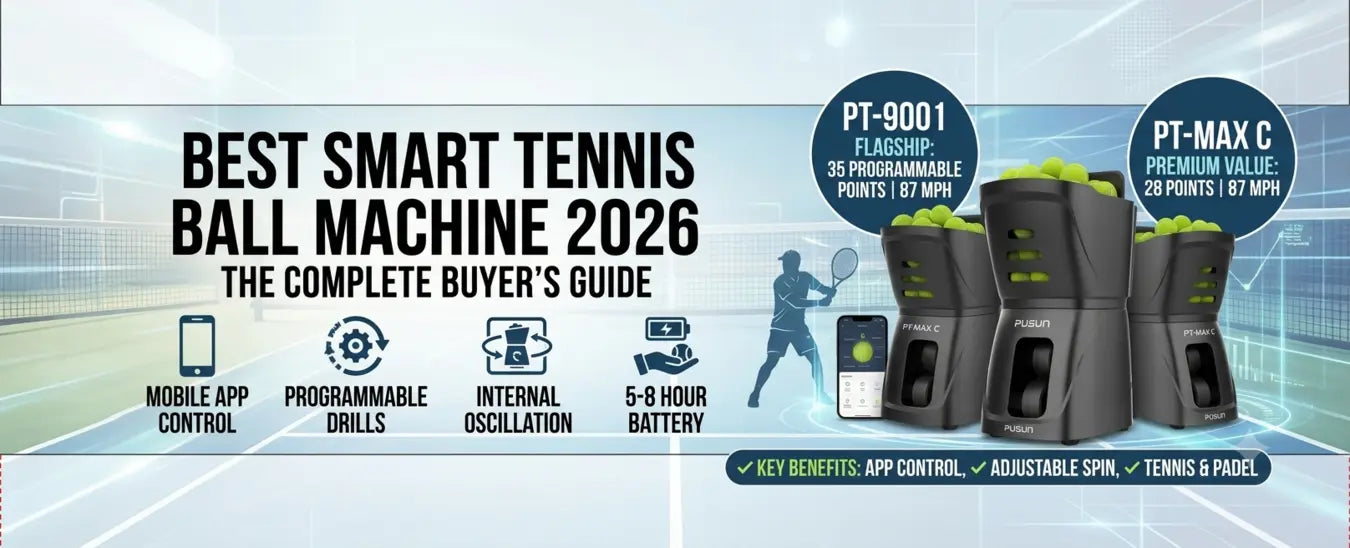
If you're researching the tennis ball machine price in the USA, you're likely looking for the best balance between performance, features, and value. Tennis ball machines have become one of the smartest investments for players who want to improve their game without depending on a practice partner. From beginner-friendly trainers to advanced smart training machines, today's market offers options for every skill level and budget. The price of a tennis ball machine in the United States can range from under $500 for basic training kits to nearly $2,000 for professional-grade machines equipped with smart programming, internal oscillation, app control, adjustable spin, and extended battery life. While cost is an important factor, choosing the right machine depends on much more than the price tag. In this guide, we'll explain the typical tennis ball machine price in USA, what influences the cost, and how the latest PUSUN models compare. Whether you practice at home, coach a team, or compete in tournaments, you'll have a clearer understanding of which machine offers the best value for your needs. Quick Recommendation If you are new to tennis or mainly practice at home, the PT-Mini Pro is a practical and affordable starting point. For regular players who want stronger training features, the PT-Smart offers 75 mph speed, 28 landing points, app control, and 100-ball capacity at a mid-range price. If you want a more realistic training experience, the PT-Smart Pro upgrades the machine with internal oscillation while keeping the same 75 mph speed and 28 programmable landing points. For advanced players, coaches, and clubs, the PT-MAX C and PT-9001 provide higher speed, longer battery life, larger ball capacity, and more professional drill customization. Understanding Tennis Ball Machine Price in USA The tennis training market continues to evolve as manufacturers introduce smarter programming, mobile app control, and more customizable training features. Today's machines range from basic training models for beginners to advanced programmable machines designed for competitive players and coaches. Category Price Range (USD) Best For Basic Portable $200–$600 Beginners and casual players Intermediate Programmable $600–$1,500 Club players and improving players Advanced Programmable $1,500–$2,000+ Competitive players, coaches, and academies What Affects Tennis Ball Machine Price in the USA? Several features influence the price of a tennis ball machine. Smart Training Technology Modern machines do much more than launch balls. Premium machines include programmable drills, mobile app control, and customizable training modes that allow players to tailor every practice session. Instead of repeating identical shots, advanced machines simulate realistic rallies with varying speeds, spins, and landing positions. Ball Speed Maximum ball speed significantly affects price.Beginner machines typically launch balls around 37 mph, while advanced models can reach 75 mph or even 87 mph, allowing players to practice against tournament-level pace. Higher speeds require stronger motors and more advanced engineering. Oscillation System Basic machines often move the entire body left and right. Premium models use internal oscillation, where the launching mechanism changes direction while the machine itself remains stationary. This creates more realistic shot variation while reducing mechanical wear. Battery Performance Battery technology is another major pricing factor. Machines equipped with LiFePO4 batteries provide longer operating times, faster charging, and greater durability compared to standard batteries. Longer battery life is particularly valuable for coaches and clubs running multiple training sessions each day. Drill Programming Advanced programming allows players to create custom training routines instead of relying on fixed ball patterns. Machines with programmable landing points naturally cost more because they offer greater flexibility for technical development. PUSUN Tennis Ball Machine Price in USA PUSUN offers one of the broadest product lineups available, covering beginners through professional players. Instead of forcing every player to buy the most expensive machine, PUSUN provides several models designed for different budgets and training goals. PUSUN Tennis Trainer Kit – $448 For players entering the sport, the PUSUN Tennis Trainer Kit is the most affordable option. Priced at $448, it focuses on helping beginners develop proper rhythm and ball striking without requiring a hitting partner. This training kit includes: Beginner-friendly design Return net system Portable construction Home practice setup Carry bags Free shipping It works particularly well for backyard practice, garages, driveways, and smaller training spaces. For players learning the fundamentals, this represents one of the lowest tennis ball machine prices in the USA. PUSUN PT-Mini Pro – From $549 The PT-Mini Pro is designed for beginners who want a dedicated tennis ball machine rather than a basic trainer. Starting at $549, it provides a compact yet capable training solution. Key features include: 37 mph maximum speed App control Portable design Beginner-friendly operation Solo practice support Players who primarily focus on stroke repetition and consistency will find excellent value at this price point. PUSUN Tennis Trainer Kit PT-Mini Pro – $599 The upgraded PT-Mini Pro Tennis Trainer Kit combines the PT-Mini Pro machine with a return net system. Priced at $599, it helps reduce ball collection time while allowing players to spend more time hitting. The package includes: Tennis ball machine Return net App control Portable bags Beginner-focused setup Free shipping This solution is especially practical for players practicing alone at home. PUSUN PT-Smart – $1,198 Moving into the mid-range category, the PT-Smart Tennis & Padel Ball Machine offers significantly more capability. Priced at $1,198, it introduces advanced programmable features usually found on more expensive machines. Highlights include: 75 mph / 120 km/h 100-ball capacity 28 landing points 4–6 hours battery life 12 tennis drills / 14 padel drills External oscillation Unlike beginner machines, the PT-Smart is built for players who want to improve movement, consistency, and shot timing. PUSUN Smart Pro – $1,398 The Smart Pro Tennis & Padel Ball Machine is designed for beginners through advanced players. Priced at $1,398, it delivers advanced training features while remaining more affordable than flagship models. Major features include: 75 mph / 120 km/h 100-ball capacity 28 programmable landing points 4–6 hours battery life 12 tennis drills / 14 padel drills Internal oscillation App / remote / Apple Watch control For players who want advanced training without paying flagship prices, the Smart Pro offers an excellent balance of features and affordability. PUSUN PT-MAX C – $1,548 The PT-MAX C moves into the premium category. At $1,548, it delivers performance suitable for advanced players, coaches, and tennis clubs. Key specifications include: 87 mph / 140 km/h Approx. 150-ball capacity 28 programmable landing points 5–8 hours battery life 12 tennis drills / 14 padel drills Internal oscillation The PT-MAX C also supports custom drill programming, allowing coaches and players to create realistic practice scenarios tailored to different playing styles. PUSUN PT-9001 – $1,899 The PUSUN PT-9001 represents the company's flagship tennis and padel training machine. Priced at $1,899, it offers the most comprehensive training features in the lineup. Compared with the PT-MAX C, the PT-9001 increases customization by providing 35 programmable landing points, making it suitable for elite-level training. Additional features include: 87 mph / 140 km/h Approx. 150-ball capacity 35 programmable landing points 5–8 hours battery life 12 tennis drills / 14 padel drills Internal oscillation Flagship model The PT-9001 is ideal for coaches, academies, advanced players, and anyone seeking maximum flexibility from a smart training machine. PUSUN Tennis & Padel Product Lineup Comparison Model Price (USD) Max Speed Battery Life / Power Key Features & Target Audience Tennis Trainer Kit $448 N/A (Static Net) Manual / No Battery Best For: Beginners practicing at home (garages, backyards). • Includes a return net system, portable construction, and carry bags. PT-Mini Pro $549 37 mph (60 km/h) Included Best For: Beginners focusing on solo stroke repetition. • Features App control, highly portable design, and beginner-friendly operation. PT-Mini Pro Trainer Kit $599 37 mph (60 km/h) Included Best For: Solo home practice with minimal ball retrieval. • Combines the PT-Mini Pro machine with a dedicated return net system and portable bags. PT-Smart $1,198 75 mph (120 km/h) 4–6 hours (External LiFePO4) Best For: Mid-range players improving movement and shot timing. Supports Tennis & Padel. Features 28 landing points, 100-ball capacity, external oscillation, App, and Remote. Smart Pro $1,398 75 mph (120 km/h) 4–6 hours (External LiFePO4) Best For: Intermediate to advanced players wanting premium features on a budget. Internal oscillation, 28 programmable landing points, 12 tennis / 14 padel drills, 6 spin levels. Triple control including Apple Watch support. PT-MAX C $1,548 87 mph (140 km/h) 5–8 hours (External LiFePO4) Best For: Advanced players, coaches, and clubs seeking premium performance. Matches flagship speed (87 mph). 28 programmable landing points, 12 tennis / 14 padel drills, 6 spin levels, and custom drill programming via triple control. PT-9001 (Flagship) $1,899 87 mph (140 km/h) 5–8 hours / 6,000+ shots (External LiFePO4) Best For: Elite players, professional coaches, and tennis academies. Maximum Precision: Upgraded to 35 programmable landing points. Internal oscillation, 12 tennis / 14 padel drills, Apple Watch compatibility, extendable handle, and heavy-duty wheels. Which Tennis Ball Machine Offers the Best Value? Choosing the right machine depends on your playing level and how often you practice. If you're just beginning, the Tennis Trainer Kit or PT-Mini Pro provides affordable solo training with a compact design. Players who practice regularly will appreciate the PT-Smart or Smart Pro, which introduce app control, internal oscillation, and programmable training features. Competitive players, coaches, and clubs are likely to benefit most from the PT-MAX C or PT-9001, both of which deliver professional-level performance, extended battery life, and customizable drills that support long-term player development. Support, Shipping, and Long-Term Value PUSUN also provides local inventory in the EU and the US, free shipping, no import duties, and fast delivery within 2–5 days on eligible models. Price should never be evaluated in isolation. After-sales support and shipping services also contribute to overall value. PUSUN includes: Free shipping within supported regions Local U.S. warehouse fulfillment for faster delivery on many models 3-Year Support Modular design for easier repairs Replacement parts support during the support period These benefits can reduce long-term ownership costs and provide additional confidence when investing in a premium training machine. When comparing the tennis ball machine price in the USA, it's important to look beyond the initial purchase price. The right machine should match your current skill level while supporting your progress over time. PUSUN offers options for every type of player, from affordable beginner training kits under $500 to professional-grade machines with programmable drills, app control, internal oscillation, and extended battery life. Whether you're practicing at home, coaching a team, or preparing for competition, choosing a machine with the right combination of features and durability will help you make the most of every training session.
Learn moreBest Tennis Ball Machine Reviews 2026: Best Picks for Every Skill Level
The best tennis ball machines in 2026 combine app-controlled drills, variable spin, oscillation, and long battery life. For serious players, the PUSUN PT-9001 tennis ball machine leads for professional-grade training. The PUSUN PT-Smart tennis ball machines offer the best value, and the PUSUN PT-Mini tennis ball machines suit beginners and youth players on a budget. If you are comparing tennis ball machine reviews 2026, focus on drill flexibility, spin control, battery life, portability, and ease of use. Quick Comparison: PUSUN Tennis Ball Machines at a Glance Model Best For Max Speed Ball Capacity Battery Life Control Price (USD) PT-9001 Top Pick Advanced / Coaches 140 km/h 150 balls 8+ hrs App + Remote $2,199 PT-MAX C Flagship Competitive players 140 km/h 150 balls 8 hrs App + Watch $1,898 PT-Smart Intermediate ~120 km/h 120 balls 8 hrs App + Remote $1,298-$1,498 PT-Mini Pro Beginner / Youth ~80 km/h 65+ balls 3-5 hrs Remote $549 PT-Mini Entry-level ~70 km/h 65+ balls 3-5 hrs Remote $799 Why Tennis Ball Machine Reviews Matter in 2026 Finding the right tennis ball machine is harder than it looks. With dozens of models on the market ranging from bare-bones launchers to AI-enabled training systems, it is easy to overspend on features you will never use or, worse, underspend on a machine that holds back your development. These tennis ball machine reviews are designed to cut through the noise. Whether you are a club coach building drill programs, a competitive player chasing consistency, or a beginner just getting started, the right machine changes the quality of every solo session. In this guide, we evaluate machines on the criteria that actually matter: speed and spin range, oscillation realism, battery life, portability, and control flexibility. We then walk through the complete PUSUN lineup, the only machines we recommend, explaining exactly which player profile each model suits and why. For players searching for best tennis ball machine reviews or best tennis ball machine reviews 2026, the goal is not to buy the most expensive option, but to choose the right tool for your level and training style. How We Evaluated These Machines Every machine in this guide was assessed against six core performance criteria: Speed range Spin control Oscillation Battery life Control interface Build quality and durability We only feature machines from PUSUN Tennis, a manufacturer with a growing reputation for smart, app-integrated ball machines at competitive prices and with a 3-year warranty that backs every purchase. Training principles align with the United States Tennis Association and the International Tennis Federation. PUSUN Tennis Ball Machine Reviews: Full Lineup #1 Top Pick Advanced Players & Coaches PUSUN PT-9001 Tennis Ball Machine The PT-9001 is PUSUN's professional-tier machine and the most capable ball machine the brand offers. It fires balls at up to 140 km/h with 12 customizable training modes, making it suitable for everything from baseline consistency drills to high-pressure serve-return simulations. The app-based control system lets you adjust ball speed, topspin, backspin, and oscillation with granular precision, all without stepping away from the baseline. That level of programmability is typically found only in machines costing significantly more from competing brands. Battery life runs over 8 hours, meaning morning to evening training days are fully supported on a single charge. The 150-ball capacity further reduces interruptions. Best for: Advanced competitive players, tennis coaches, and club programs. Strengths 140 km/h max ball speed 12 programmable training modes 150-ball capacity 8+ hour battery App + remote control Considerations Premium price Heavy unit Verdict: The PUSUN PT-9001 tennis ball machine is the closest thing to a personal robot coach. #2 Best Flagship Competitive Players PUSUN PT-MAX C Tennis Ball Machine The PT-MAX C is designed for competitive athletes who want match-level training. It includes AI-powered drills and advanced oscillation patterns. Best for: Competitive players Verdict: The PUSUN PT-MAX C tennis ball machine is ideal for high-level practice. #3 Best Value Intermediate Players PUSUN PT-Smart Tennis Ball Machines The PT-Smart series offers strong features at a more accessible price point. Best for: Intermediate players Verdict: The PUSUN PT-Smart tennis ball machines provide excellent value for most users. #4 Best Portable Beginners & Youth PUSUN PT-Mini Tennis Ball Machines The PT-Mini series is lightweight, simple, and designed for beginners. Best for: Beginners Verdict: The PUSUN PT-Mini tennis ball machines are perfect for entry-level training. Side-by-Side Comparison Feature PT-9001 PT-MAX C PT-Smart PT-Mini Speed High High Medium Low Spin Full Full Full Basic Control App App App Remote Level Advanced Advanced Intermediate Beginner How to Choose the Right Tennis Ball Machine Beginners → choose simple machines Intermediate → focus on oscillation Advanced → prioritize spin and drills Frequent players → choose longer battery life These recommendations align with guidance from the Professional Tennis Players Association. Final Verdict Best overall: PUSUN PT-9001 tennis ball machine Best flagship: PUSUN PT-MAX C tennis ball machine Best value: PUSUN PT-Smart tennis ball machines Best beginner: PUSUN PT-Mini tennis ball machines Whether you are exploring tennis ball machine reviews 2026 or narrowing down the best tennis ball machine reviews 2026, these options cover every level. Ready to Train Smarter? Browse the full lineup here:PUSUN Tennis Ball Machines All prices and availability are accurate as of April 2026 and may change. Frequently Asked Questions What is the best tennis ball machine in 2026? The best tennis ball machine in 2026 depends on your skill level, but advanced players typically prefer models like the PUSUN PT-9001 due to its speed, spin control, and programmable drills. Intermediate players often choose the PT-Smart series for its balance of features and price, while beginners benefit from simpler models like the PT-Mini. Are tennis ball machines worth it? Yes, tennis ball machines are worth it for players who want consistent practice without relying on a partner. They allow repeated shot training, helping improve timing, footwork, and muscle memory. Many players see faster improvement using a machine regularly. How much does a good tennis ball machine cost? A good tennis ball machine usually costs between $500 and $2,500. Entry-level models are more affordable and suitable for beginners, while advanced machines with app control and drill programming cost more but offer better training value. How long do tennis ball machines last? Most tennis ball machines last between 5 and 10 years with proper maintenance. Cleaning the machine, storing it properly, and maintaining the battery can significantly extend its lifespan. What features should I look for in a tennis ball machine? Important features include speed control, spin variation, oscillation, battery life, and ease of use. Advanced players should also look for programmable drills and app control, while beginners should prioritize simplicity and portability. Can you use regular tennis balls in a ball machine? Yes, most machines support both pressurized and pressureless tennis balls. For best results, use the same type of balls during each session to maintain consistent performance. What is the best tennis ball machine for beginners? The best tennis ball machine for beginners is typically a lightweight and easy-to-use model like the PT-Mini. It allows players to focus on building consistency and basic strokes without dealing with complex settings.
Learn moreWhere Can I Buy a Tennis Ball Machine Online?
You can buy a tennis ball machine from a few different places, and that decision matters more than most people think. The wrong purchase channel can leave you with warranty headaches, outdated stock, or a machine that ships from the other side of the world with zero local support. Here's a clear breakdown of your options, and why one stands above the rest. The Main Places to Buy a Tennis Ball Machine 1. Directly From the Manufacturer's Website This is the smartest option for most buyers. Purchasing directly from the brand means verified product authenticity, the full manufacturer warranty, accurate specs, and direct access to customer support if anything goes wrong. No middlemen. No ambiguity about whether your warranty is valid. No risk of receiving a refurbished unit listed as new. For players who want structured solo training with AI smart drills, app control, and long battery life, PUSUN Tennis is one of the strongest direct-purchase options available right now. Every machine ships free to the US and EU in 1-5 days, backed by a 3-year warranty and local service centers in California and Germany. That kind of post-purchase support is rare at this price point. 2. Specialty Tennis Retailers Sites like Tennis Warehouse, Tennis Express, and OnCourt OffCourt carry machines from brands like Lobster, Spinshot, and Sports Tutor. These retailers are legitimate and well-regarded in the tennis community. Thing is, there's a catch most buyers don't know about. Many of these retailers operate on a "drop ship" model for ball machines. They don't actually hold the stock. The machine ships directly from the manufacturer, which means longer delivery times, and returns often route back to the manufacturer anyway, sometimes with restocking fees and return shipping costs on your end. So you're essentially buying from the manufacturer, just with an extra layer of friction in between. 3. Large Online Marketplaces Amazon and similar platforms carry ball machines, including budget and off-brand options. For casual buyers or anyone looking for a basic starter machine, this can work fine. But for serious players investing $1,000 or more, marketplaces introduce real risks. Seller authorization is hard to verify. Warranty validity through the brand is not always guaranteed. Stock listings don't always reflect the latest model version. And if something goes wrong, support often bounces between the marketplace and the manufacturer without a clear resolution. 4. Local Tennis Shops and Sporting Goods Stores Some specialty retailers have physical locations where you can see machines in person. That hands-on experience has genuine value, especially for buyers who want to check size, weight, and build quality before committing. The downside? Inventory is almost always limited to one or two models at best. And pricing rarely beats buying direct. Buying Channel Comparison: What You Actually Get So where does each option actually stand when you stack them side by side? This is where it gets clear fast. Purchase Channel Warranty Guaranteed Fast Shipping Full Model Range Local Support Return Clarity Direct from PUSUN Yes, 3 years Yes, 1-5 days US/EU Yes Yes, US and Germany Yes, 30 days Specialty Tennis Retailers Sometimes Often drop-ship delays Partial Via manufacturer Varies, often restocking fees Amazon / Marketplaces Not always Varies by seller Limited Rarely Varies by seller Local Tennis Shops Yes Immediate if in stock Very limited In person Yes Truth is, the table tells the story pretty clearly. Buying direct from PUSUN removes every layer of uncertainty that the other channels introduce. Why Buying Direct From PUSUN Is the Best Option Look, if you're serious about training and want a machine that delivers real programmable drills, AI-powered sessions, and hardware built for regular use, buying direct removes every question mark. Here's what you get when you buy directly from the PUSUN Tennis store: Free shipping across the US and EU, arriving in 1-5 days 3-year warranty on the main unit, 1 year on the battery Local repair centers in California and Germany 30-day return policy with clear, transparent terms Authentic replacement parts shipped globally Direct manufacturer communication if anything needs resolving That combination of fast shipping, long warranty, and local service is genuinely hard to match through any third-party channel. New vs. Used: What's Worth It? Used tennis ball machines show up on secondhand marketplaces occasionally, and the prices can look attractive. But there are real risks worth understanding. Motors accumulate wear invisibly. Battery capacity degrades over charge cycles, and a used machine may only hold 40-50% of its original runtime. Manufacturer warranties don't transfer. Missing accessories like remotes, chargers, or ball trays are common with secondhand purchases. For players training regularly, a new machine with a full warranty is almost always the better investment. The peace of mind alone justifies the price difference. The Smartest Way to Buy a Tennis Ball Machine For most players, the answer is straightforward. Buy direct from a manufacturer that offers fast shipping, a strong warranty, local service, and clear return terms. PUSUN ticks every one of those boxes. Their lineup covers everything from structured intermediate training to advanced app-controlled sessions, all available to browse and buy at pusuntennis.com. No drop-ship delays. No warranty ambiguity. No middlemen between you and your machine. The harder question usually isn't where to buy. It's which machine fits your game. And that's a much more enjoyable problem to solve. FAQ Where is the safest place to buy a tennis ball machine? Directly from the manufacturer's official website. It guarantees warranty validity, authentic stock, and direct support access. Can I buy a tennis ball machine on Amazon? Yes, but verify seller authorization and warranty validity carefully. Marketplace purchases can complicate returns and post-purchase support. Does PUSUN ship internationally? Yes. PUSUN offers free shipping to the US and EU with 1-5 day delivery, and ships to most major global markets. Should I buy a used tennis ball machine? Generally not for regular trainers. Battery degradation, motor wear, and no warranty make used machines a risky investment at this price point. Do specialty tennis retailers carry ball machines in store? Some do, but selection is almost always limited. Buying direct gives you the full model range with transparent specs and clear shipping terms.
Learn moreWhat Is the Best Tennis Ball Machine to Buy?
Picking the best tennis ball machine is one of those decisions that feels simple until you start actually looking. Suddenly there are a dozen brands, a hundred specs, and zero clarity on what any of it means for your game. Here's the thing: the right machine isn't the most expensive one. It's the one that matches how you actually train. What Features Actually Matter in a Tennis Ball Machine 2026 Before jumping to specific models, let's talk about what separates a machine worth buying from one that collects dust after three sessions. Ball speed range is the starting point. Recreational players are well served by machines topping out around 60-75 mph. Competitive players need 80-90 mph to simulate real match pace. Anything below 40 mph is really only useful for kids and absolute beginners. Spin control is where a lot of budget machines fall short. Independent testing shows that only machines above a certain price threshold consistently produce topspin and backspin that actually changes how the ball bounces. Below that, you're mostly getting flat feeds regardless of what the spec sheet says. Oscillation matters more than most buyers realize. External oscillation is visible and predictable, meaning you can read where the ball is going before it leaves the machine. Internal oscillation is hidden, which forces you to react and move like you would in a real point. For serious players, internal oscillation is the better option. Battery life should be 5 hours minimum for anyone training regularly. A machine that dies 90 minutes into a session kills your momentum and your rhythm. Control options are the quality-of-life feature nobody talks about enough. Being able to adjust speed, spin, and interval from your wrist or phone mid-drill, without walking across the court, keeps sessions tight and intentional. Here's a quick breakdown of what to prioritize based on your level: Player Level Key Priority Minimum Speed Nice to Have Beginner Simplicity, consistency 30-50 mph Basic oscillation Intermediate Spin control, programmability 60-75 mph App control, 28+ landing points Advanced / Competitive Internal oscillation, high speed 80+ mph AI drills, 35 landing points Coach / Club Ball capacity, session length 75-90 mph Triple control, long battery Why PUSUN Stands Out in 2026 The tennis ball machine market in 2026 is crowded. You have traditional machines like the Spinfire Pro 2 and Lobster Elite series at the premium end, budget options like the Slinger Bag for casual players, and newer AI-driven machines entering the mix. Most players land somewhere in the middle, wanting serious training features without paying for things they'll never use. PUSUN sits squarely in that sweet spot. Every machine in their lineup comes with AI smart drills that adapt to your skill level and dominant hand, triple control via app, Apple Watch, and remote, a 3-year warranty, local service centers in California and Germany, and free shipping across the US and EU in 1-5 days. That support structure matters when you're investing over a thousand dollars in training equipment. And unlike many competitors, PUSUN builds machines with internal oscillation at the core, not as a premium add-on. The Best PUSUN Tennis Ball Machine for Every Type of Player Need in 2026 Best for Intermediate Players: PUSUN Smart ($1,298) The PUSUN Smart is where most club players between 3.0 and 4.0 should start. Up to 75 mph, 28 programmable landing points, 12 training modes, and a 156Wh battery running 5-8 hours. It weighs 33 lbs with a foldable luggage design that rolls easily to the court and fits in any SUV trunk. The AI drill generation is what makes this genuinely different from a basic ball feeder. The machine reads your level and builds drill sequences around your weaknesses, not just random feeds to random spots. App control, Apple Watch support, and a physical remote all come standard. For a player who trains a few times a week and wants structured solo sessions without overcomplicating things, the Smart is hard to beat at this price. Best Sweet Spot: PUSUN Smart Pro ($1,498) The PUSUN Smart Pro adds one feature that changes the feel of every session: internal oscillation. The ball trajectories become unpredictable in a way that forces real movement and reaction, not just groove-the-same-shot repetition. Same 28 landing points, same 75 mph top speed, same long battery. But that oscillation upgrade pushes it from solid practice tool to something that genuinely simulates match variability. For players between 3.5 and 5.0 who want their solo sessions to feel more like real preparation, the Smart Pro is the pick. The extra $200 over the Smart is well justified. Best for Competitive Players and Coaches: PUSUN PT-MAX C ($1,798) Step up to 87 mph and 150-ball capacity with the PT-MAX C. That combination of higher speed and larger hopper means longer uninterrupted sessions and ball feeds that replicate the pace of competitive match play. The 8-hour battery, 12 training modes, and full triple-control system make this the machine for coaches running drills and competitive players who need high-intensity, high-volume sessions. It's built for people who are on court multiple times per week with a specific training agenda. Best Flagship: PUSUN PT-9001 ($2,199) The PT-9001 is the top of the PUSUN lineup. 35 programmable landing points (the most of any model), 87 mph, a massive 252Wh battery, and 11-degree left-right internal oscillation for the most realistic ball trajectories in the range. At 51 lbs it's more suited to a permanent court setup than casual transport, but for advanced players and club coaches who want maximum drill precision, nothing in this price range comes close. Note: currently sold out, which speaks for itself. How to Pick the Right One for Your Game So which tennis ball machine should you actually buy? Honestly, it comes down to one question more than any other: how often do you train, and what are you trying to fix? Training once or twice a week on fundamentals? The PUSUN Smart gives you everything you need without paying for features you'll rarely use. Training three-plus times a week and wanting more realism? The Smart Pro's internal oscillation makes a real difference in session quality. Coaching groups or training at a competitive level? The PT-MAX C's speed and capacity are built for exactly that. Want the absolute best PUSUN has to offer? Keep an eye on the PT-9001 for when it's back in stock. All four come with a 3-year warranty, 30-day returns, and the same AI drill technology. You can browse the full PUSUN collection to compare specs side by side and check current stock. Is a Tennis Ball Machine Worth Buying? Look, this is the question underneath the question. And the answer depends entirely on your situation. If you struggle to find consistent hitting partners, want high-volume repetition on specific shots, or need flexible practice scheduling, a ball machine pays for itself quickly. Research into deliberate practice consistently shows that focused, high-repetition training accelerates skill development faster than casual hitting. A machine gives you that repetition on demand. The caveat, and it's an important one: a machine is a supplement, not a replacement. It builds mechanics and conditions your footwork. Live hitting and match play develop the tactical judgment and anticipation that no machine can replicate. Use both, and your game improves faster than either alone. Use your machine for: technical refinement, footwork patterns, high-volume shot repetition, fitness conditioning, and solo rehab sessions. Keep live play for: tactical development, reading opponents, match pressure, and decision-making under stress. The players who get the most out of ball machine training walk onto the court with one clear goal per session. Not "hit some balls," but "work my cross-court forehand at 65 mph with moderate topspin for 45 minutes." That kind of intentional practice is what separates players who improve from those who plateau. What's the one shot in your game you'd drill obsessively if you had unlimited feeds? That's where you start. FAQ What is the best tennis ball machine to buy for home use? For most home players, the PUSUN Smart at $1,298 offers the best balance of features, AI drills, and battery life without overcomplicating things. How much should I spend on a tennis ball machine? Serious players should budget $1,200 to $2,200 for a machine with real spin control, programmable drills, and internal oscillation. Budget machines under $500 typically deliver flat feeds with minimal training value. What is internal oscillation and why does it matter? Internal oscillation hides the ball direction inside the machine until launch, forcing you to react rather than anticipate. It makes practice significantly more realistic than external oscillation, which is visible and predictable. Do PUSUN machines work on clay courts? Yes. All PUSUN machines use a dust-resistant, sealed design rated for clay, hard courts, and grass. Can a ball machine replace a tennis coach? No. A machine builds repetition and mechanics. A coach develops tactical thinking, corrects form in real time, and provides feedback no machine can replicate. Use them together for best results.
Learn moreDo Professional Tennis Players Use Ball Machines?
Here's something most recreational players don't realize: the same type of training tool collecting dust in your club's storage room is also used by some of the best players in the world. Professional tennis players absolutely use ball machines, just not the way beginners do. How the Pros Actually Train Professional tennis training isn't one thing. It's a layered system. A typical training day might include live rallying with hitting partners, pattern drills with a coach, serve and return work, fitness sessions, and yes, time with a tennis ball machine. Think of it like a chef's kitchen. A sharp knife doesn't replace the stove. Each tool has its job. Ball machines slot into pro training as the tool for repetition and precision, not spontaneity. Here's what a structured pro session looks like at a glance: Training Component Purpose Live rallying with hitting partners Match realism, tactics, anticipation Coach-fed drills Technical refinement with feedback Ball machine sessions High-volume repetition, shot isolation Serve practice Mechanics and consistency Fitness and footwork Movement, endurance, recovery Ball machines don't sit at the top of that list. But they're firmly on it. The Andre Agassi Story Every Tennis Player Should Know You want proof that ball machines shape champions? Look at Andre Agassi. His father Mike built a custom ball machine famously nicknamed "the dragon" and fired thousands of balls at young Andre every single day. Those relentless repetitions built the hand-eye coordination and groundstroke timing that made Agassi one of the most lethal ball-strikers the sport has ever seen. That's not a coincidence. That's deliberate practice at its most extreme. What About Today's Top Players? Serena Williams and Novak Djokovic have both been noted using ball machines during training blocks. Top-tier brands note their machines are used at the ATP Training Center in Ponte Vedra Beach, Florida. This is about as official as it gets. So yes. The pros are using them. Why Do Professional Players Use Ball Machines? There's a specific reason elite athletes reach for a machine instead of calling a hitting partner. A few reasons, actually. Pure, Unmatched Repetition A ball machine doesn't get tired. It doesn't hit the ball slightly differently on rep 47. It doesn't need a water break. When a professional player is trying to groove a new backhand motion after a technical tweak from their coach, they need to hit that shot 200 times in a row. Same height, same pace, same angle. No human can deliver that. Muscle memory is built through repetition. Machines make that repetition possible at a scale that's genuinely hard to replicate otherwise. Shot Isolation Without the Noise Live play is messy. Brilliant, but messy. Every ball your opponent hits is slightly different. That variability is great for match preparation. But when you're trying to fix your approach shot footwork or dial in your overhead? Variability is the enemy. Ball machine drills let pros isolate one shot at a time. They can program the machine to deliver a medium-pace ball to the backhand side, chest height, every five seconds. And then they just work. No distractions. No adjustments. Pure focus. Training Without a Partner Tour players travel constantly. Not every city has a world-class hitting partner on standby. A portable tennis ball machine means a player can still get meaningful, structured reps in regardless of location. It's not the ideal session. But it's better than nothing, and for a professional, missing training days isn't really an option. What Ball Machines Can't Do for the Pros Look, it would be easy to oversell this. But here's the thing: ball machines have real limitations at the elite level, and professionals know it. They Don't Replicate Match Conditions A machine fires the ball from a fixed position. A real opponent gives you visual cues: the toss of the ball, the rotation of the shoulder, the angle of the racquet. Your brain reads those cues before the ball even crosses the net. That anticipation and decision-making is a massive part of professional tennis. Research backs this up. Studies show that ball machine feeds actually change a player's movement initiation and swing timing compared to returning shots from a live opponent. Over-reliance can distort timing in subtle but real ways. No Tactical Pressure A machine doesn't know you. It can't exploit your weak cross-court backhand or shift strategy when you start attacking the net. Tennis tactics are about reading and responding to another human. A machine can't teach that. This is exactly why live hitting and match play remain the core of professional training. Ball machines are supplements. Not substitutes. Modern Ball Machines Are Changing the Game The machines of today are a far cry from the simple ball-launching devices of the 1970s. Modern AI-powered tennis ball machines can vary spin, speed, height, and placement in programmable sequences that simulate real rally patterns. Some even use computer vision to track player positioning and adjust shots in real time. This is where things get genuinely exciting for serious players at every level. If you want to train the way pros approach solo sessions, with structured, purposeful AI smart drills and programmable patterns, the PUSUN Smart Pro Tennis Ball Machine is built exactly for that. It combines AI drill programming with long battery life, meaning you can run a full, high-intensity session without stopping to reload or recharge. For players who want app-controlled precision and even more training customization, the full PUSUN lineup includes options from the Smart series to the flagship PT-MAX C, each designed around how serious players actually practice. These aren't toys. They're training tools built for people who want to improve on purpose. What Recreational Players Can Take From All This So you're not on the ATP tour. Fair. But the principles that make ball machines valuable for professionals apply directly to your game too. Set one goal per session. Pros don't jump on a machine and just hit balls. They walk in knowing exactly what they're working on. Pick one thing and work it until it sticks. Combine machine work with live play. The machine builds your mechanics. Live play tests whether those mechanics hold up when it matters. You need both. Use the machine to recover and rehabilitate. Coming back from an injury? Controlled, predictable feeds let you ease back in without pressure or surprise movements. The fact that professional tennis players treat ball machines as intentional training tools, not shortcuts, tells you everything about how to use one properly. The real question isn't whether pros use ball machines. They do. The real question is whether you're getting everything you can out of the tool when you use one. Because if Agassi's father built a machine from scratch just to give his son an edge, there's probably something worth paying attention to here. What's the one part of your game you'd fix if you had unlimited consistent feeds? Start there. FAQ Do ATP or WTA players use ball machines? Yes. Many pros use them during technical training, particularly for high-repetition drills and shot isolation. Are ball machines effective for serious improvement? When used with intention, absolutely. Combine machine sessions with live play so your mechanics transfer to real match situations. Did any famous players train with ball machines growing up? Andre Agassi is the most well-known example. His father built "the dragon," a custom machine that fired thousands of balls at him daily. What features matter most in a serious training machine? Look for programmable AI drill modes, variable spin and speed, solid ball capacity, and app control for customizing patterns. Can a ball machine replace a coach or hitting partner? No. It's a repetition tool, not a tactical one. Use it alongside coaching and live practice, not instead of them.
Learn moreWhat Are the Best Tennis Ball Machines? Top Picks by Use Case
What Are the Best Tennis Ball Machines? The best tennis ball machine depends on how you train, your skill level, and how much control you want. There is no single machine that fits every player. Some players want simple, reliable repetition. Others prefer app-controlled drills and more structured sessions. Instead of chasing the most expensive option, the smarter approach is choosing a machine that matches your real training habits. That’s where Pusun Tennis machines fit well. They are built for practical home and club-level training, not novelty features. Below, we break down the best Pusun Tennis ball machines by use case, following the same evaluation logic used by top-ranking buyer guides. Best Pusun Tennis Ball Machines by Use Case (Best Overall for Most Players) Your Smart Personal Coach For most recreational and club players, Your Smart Personal Coach is the most balanced option in the Pusun Tennis lineup. It focuses on consistent ball delivery, adjustable speed and spin, and guided training without overwhelming complexity.It is well suited for players who: Practice alone regularly Want dependable repetition Prefer structured sessions over manual feeding This machine fits comfortably into the upper mid-range home-use category, making it a practical long-term choice for players focused on improving consistency and timing.Players who want a closer look at the different configurations can explore the Your Smart Personal Coach lineup designed for solo and guided training Best for App-Controlled and Advanced Training PUSUN PT-MAX C Tennis Ball Machine with App Control & AI DrillsFor players who want deeper control over training sessions, the PUSUN PT-MAX C is the most advanced machine offered by Pusun Tennis.This model is best suited for players who: Train multiple times per week Prefer app-based control Want structured drill sessions instead of manual adjustments The main advantage of this machine is flexibility. App-based control allows players to focus on movement and execution rather than constantly adjusting settings, which can be especially helpful during longer sessions. Best for Beginners and Improving Players Your Smart Personal Coach (Entry Versions) Beginners tend to improve faster with machines that are simple and forgiving. Entry-level versions of Your Smart Personal Coach are designed to support that learning phase.They help beginners: Groove basic strokes Develop rhythm and timing Practice without pressure from a live opponent Rather than overwhelming new players with advanced programming, these versions focus on fundamentals, which aligns with common coaching advice. Best Value for Long-Term Home Use Your Smart Personal Coach (Mid-Tier Models) For players who practice consistently but do not need advanced automation, the mid-tier versions of Your Smart Personal Coach offer strong long-term value.They balance: Feature depth Ease of use Durability for regular training This makes them a sensible choice for players who want a machine they can grow with over time, rather than replace after one season.How These Machines Compare at a Glance Training Need Recommended Pusun Machine Why It Fits Beginner practice Your Smart Personal Coach (entry) Simple, consistent feeds Regular solo training Your Smart Personal Coach Balanced features Advanced app-based drills PUSUN PT-MAX C Structured, app-controlled sessions Long-term home value Your Smart Personal Coach (mid-tier) Scales with skill level This comparison focuses on training purposes, not marketing claims. How to Choose the Best Tennis Ball Machine for You Match the machine to how you actually train Before choosing a machine, consider: Whether you want repetition or drill variety How often you practice per week Whether you prefer physical controls or app-based sessions Clear answers make the right choice obvious. Avoid paying for features you won’t use Advanced features only help if they are used consistently. Many players improve faster with reliable repetition than with complex drill programming. Why Pusun Tennis machines are a safe choice Pusun Tennis machines are positioned for serious personal training, not novelty use. Their pricing and feature sets align with what top buyer guides describe as the practical range for home and club-level players. For players comparing features and budgets, it helps to review the full range of Pusun Tennis ball machines available for home and club-level practice. The Smart Way to Choose the Best Tennis Ball Machine The best tennis ball machine is not the most expensive or the most advanced. It is the one that fits how you actually train. For many players, consistent repetition and reliable ball delivery matter more than extreme programmability. Pusun Tennis machines are designed around this reality, offering options for beginners, regular solo players, and advanced users who want app-based drills. When you choose a machine based on your skill level, training frequency, and preference for simplicity or control, improvement becomes more predictable and more enjoyable. Frequently Asked Questions What is the best tennis ball machine for home use? For most players, Your Smart Personal Coach offers the best balance of consistency, ease of use, and long-term value. Are app-controlled tennis ball machines worth it? They are worth it if you enjoy structured drills and train frequently. The PUSUN PT-MAX C is a good example of this approach. Is one tennis ball machine good for all skill levels? Some machines scale better than others. Models with adjustable speed and spin tend to work across multiple skill levels. Do beginners really need a tennis ball machine? Not required, but machines can accelerate learning by allowing pressure-free repetition. How often should I use a ball machine to see improvement? Two to four sessions per week is common for players who see steady progress.
Learn moreBest Tennis Ball Machine for Home Use 2026
Whether you're a weekend warrior looking to sharpen your groundstrokes or a junior player aiming to reach the next level, a tennis ball machine is one of the smartest investments you can make. Training with a machine means you get consistent repetitions, on your schedule, without relying on a hitting partner or coach. But with so many options on the market in 2026, choosing the right machine for home use can feel overwhelming. In this guide, we'll walk you through why a ball machine matters, what features to look for, and a curated list of the best tennis ball machines available today including the top-rated PUSUN lineup. Why a Tennis Ball Machine Is Important for Practice at Home Most recreational players only improve when they have access to consistent, structured practice. A ball machine fills that gap perfectly. 1. Consistent Repetition Builds Muscle Memory Tennis is a sport of patterns. The more you repeat a shot correctly, the more your body internalizes the motion. A ball machine delivers ball after ball at the same speed, spin, and trajectory, something even the best coach can't do manually for an extended session. 2. Train on Your Own Schedule Life gets busy. With a machine at home or at a private court, you don't need to coordinate with a partner. Early morning, late evening, or a quick 30-minute session on your lunch break — the machine is always ready when you are. 3. Target Specific Weaknesses Struggling with your backhand? Want to drill cross-court forehands? A ball machine lets you isolate and attack your weaknesses with surgical precision, something that's hard to replicate in a live-ball rally. 4. Improve Fitness and Footwork Modern machines with oscillation and multi-spot shooting force you to move laterally, helping you build court coverage and cardiovascular fitness alongside your stroke mechanics. 5. Cost-Effective in the Long Run Hiring a coach or booking court time with a hitting partner adds up fast. A quality ball machine is a one-time investment that pays dividends over years of solo training. How to Find the Best Tennis Ball Machine for Home Use Not all ball machines are created equal. Here are the key factors you should evaluate before making a purchase: Ball Capacity For uninterrupted sessions, look for a machine that holds at least 100 to 150 balls. Stopping every few minutes to pick up and reload kills your rhythm and focus. Speed Range Entry-level players need slower feeds (30 to 50 mph), while advanced players want machines capable of 80 to 100+ mph to simulate hard-hitting opponents. Make sure the machine covers the range you'll actually use. Spin Control The ability to switch between topspin, backspin, and flat shots is essential for realistic practice. Spin dramatically changes how a ball moves and bounces, so variety here is crucial. Battery Life A machine that dies after 90 minutes is frustrating. Aim for at least 4 to 6 hours of battery life per charge so you can train across multiple sessions without worrying about plugging in. Control Options The best modern machines offer remote, app, and even smartwatch control — so you can adjust settings without interrupting your practice flow. Smartphone apps often unlock advanced drill programming as well. Portability If you're moving the machine between courts or storing it at home, look for a compact, luggage-style design with wheels. Heavy, bulky machines are a headache to transport. Warranty and Support A ball machine is a serious investment. Prioritize brands that offer at least a 2 to 3 year warranty with local repair service so you're not stranded if something goes wrong. AI and Smart Drill Features 2026's most advanced machines now include AI-generated drill sequences that adapt to your skill level. This feature alone can transform solo training from repetitive hitting into structured, coach-quality workouts. Quick Comparison: Best Tennis Ball Machines for Home Use 2026 Here's a side-by-side overview of the top models reviewed in this guide: Model Price Max Speed Battery AI Drills Warranty PUSUN Smart Pro $1,398* 100 mph 5-8 hrs Yes 3 Years PUSUN Smart $1,198* 80 mph 5-8 hrs Yes 3 Years PUSUN PT-MAX C $1,798 87 mph 8 hrs Yes 3 Years PUSUN PT-9001 $2,199 N/A 5-8 hrs Yes 3 Years After $100 cart discount List of the Best Tennis Ball Machines for Home Use 2026 1. PUSUN Smart Pro Tennis Ball Machine — Best Overall Price: $1,398 (after $100 cart discount from $1,498) | Available: Black or White | Ships in 1-5 days The PUSUN Smart Pro is the flagship machine for serious home practitioners. It takes everything that makes the standard Smart model excellent and pushes it further offering a maximum speed of 100 mph, making it genuinely suitable for competitive and professional-level players. What sets this machine apart is the combination of AI Smart Drills with Level-Adaptive Generation. The machine doesn't just repeat a drill it reads your performance level and adjusts the feed to keep you challenged as you improve. It's the closest thing to having a personal coach embedded in your equipment. Key Specs: AI Smart Drills with Level-Adaptive Generation automatically adjusts to your skill level Max speed: 100 mph suitable for advanced and professional-level training 12+ Pro Modes Tennis and Padel configurations included Triple Control App, Apple Watch, and Remote Custom Spin topspin and backspin control 156Wh Battery 5 to 8 hours of playtime per charge Clay & Hard Court Sealed all-surface ready Luggage-style design with easy transport and storage 3-Year Warranty with Local Repair Service Who It's For: The Smart Pro is ideal for players who are serious about improvement — whether that's a competitive club player, a junior training to compete, or an adult who wants professional-grade equipment for home use. The 100 mph ceiling and AI drill intelligence make it future-proof as your game develops. Verdict: If your budget allows and you want the best machine for home training in 2026, the PUSUN Smart Pro is the clear choice. The jump from 80 to 100 mph and the smarter AI system justify the price difference over the standard Smart model. 2. PUSUN Smart Tennis Ball Machine — Best Value Price: $1,198 (after $100 cart discount from $1,298) | Rating: 4.6/5 (33 reviews) | Ships in 1-5 days The PUSUN Smart is where the lineup's core technology meets an accessible price point. It shares the same AI Smart Drills platform, Triple Control system, 156Wh battery, and 12+ Pro Modes as its Pro sibling with the key difference being a maximum speed of 80 mph instead of 100 mph. For most recreational and intermediate players, 80 mph is more than sufficient. The PUSUN Smart has earned strong customer reviews a 4.6 out of 5 star rating from 33 verified buyers — pointing to reliability, ease of use, and genuine training value. Key Specs: AI Smart Drills — same Level-Adaptive technology as the Pro model Max speed: 80 mph — excellent for beginner to intermediate-advanced players 12+ Pro Modes — Tennis and Padel ready Triple Control — App, Apple Watch, and Remote Topspin and Backspin control 156Wh Battery — 5 to 8 hours of playtime Clay & Hard Court Sealed Luggage-style transport design 3-Year Warranty with Local Repair Service Who It's For: The PUSUN Smart is perfect for club players, recreational enthusiasts, and developing juniors who want smart, app-connected training without paying for speed they won't use yet. It's also a great entry point for schools or community clubs on a budget. Verdict: The best value in the PUSUN lineup. You get the full AI training experience, excellent build quality, and proven customer satisfaction all at $1,198. Unless you're an advanced player regularly facing 80+ mph balls, you probably don't need to upgrade to the Pro. 3. PUSUN PT-MAX C Tennis Ball Machine — Best Battery Life Price: $1,798 | Ships to US/EU/UK in 1-5 days The PUSUN PT-MAX C targets players who want maximum training capacity in a single session. With a 150-ball hopper and an 8-hour battery life the longest in the lineup, this machine is built for marathon training days. Train from afternoon to evening without stopping to recharge or constantly refill the hopper. The PT-MAX C reaches up to 87 mph (140 km/h) and includes 12 training modes alongside the same Triple Control (App, Remote, Apple Watch) system. The serve interval is adjustable from 1.8 to 8 seconds, giving you full control over training intensity and recovery time. Key Specs: 150-ball capacity — fewer interruptions, longer unbroken sessions 8-hour battery life — the longest in the PUSUN lineup Max speed: 87 mph (140 km/h) 12 Training Modes with AI Drills Adjustable serve interval: 1.8 to 8 seconds Triple Control — App, Remote, Apple Watch 3-Year Warranty Who It's For: The PT-MAX C is perfect for dedicated players who do long, uninterrupted training sessions — or for coaches running extended group clinics. The 8-hour battery and 150-ball capacity reduce downtime significantly compared to other models. Verdict: If endurance and session length matter most to you, the PT-MAX C earns its premium. The 8-hour battery is a genuine differentiator, and the 150-ball hopper means you spend less time collecting balls and more time on the court. 4. PUSUN PT-9001 Tennis Ball Machine — Best for Advanced Players Price: $2,199 | Rating: 4.8/5 (45 reviews) | 80+ sold last month | Available in Black The PUSUN PT-9001 is the brand's premium machine, and it shows in customer reception a 4.8 out of 5 star rating from 45 reviews, with over 80 units sold in the past month. This is the machine for players who want the most comprehensive, professional-grade training setup available for home use. The PT-9001 features the widest set of adjustable parameters in the lineup, including full topspin and backspin control, 12+ Pro Modes, multi-platform control, and a durable build sealed for both clay and hard courts. It's the machine you grow into built for players who want to squeeze every possible variable out of their training. Key Specs: 12+ Pro Modes — Tennis and Padel ready Multiple Controls — App, Watch, and Remote Fully adjustable parameters — topspin, backspin, speed, interval, oscillation 5 to 8 hours battery life Durable court-sealed construction for clay and hard courts Portable design for easy transport 3-Year Warranty Who It's For: Serious club players, coaches, and advanced home trainers who want the most customizable machine in the lineup. The PT-9001's depth of settings makes it especially valuable for players working on specific tactical patterns or advanced stroke mechanics. Verdict: The highest-rated machine in the lineup with strong real-world sales data to back it up. At $2,199, it's a significant investment but for advanced players who will push every feature, it's worth every cent. Why PUSUN Tennis Ball Machines Are the Best Choice in 2026 There are dozens of tennis ball machine brands on the market, but PUSUN has carved out a clear leadership position. Here's why their lineup stands above the competition: AI-Powered Training — Genuinely Useful, Not a Gimmick PUSUN's Level-Adaptive AI Drill system genuinely adjusts to your training needs. This means your machine challenges you at the right level without requiring you to manually reconfigure settings every session, a true coach-in-a-machine experience. Triple Control Ecosystem Being able to control your machine from a smartwatch mid-rally is a game-changer. No more stopping to walk over and adjust settings, change speed, spin, or drill mode right from your wrist and keep your session flowing naturally. Built for All Courts PUSUN machines are sealed for both clay and hard courts, meaning you're not locked into a single surface. Whether your home court is hard surface, clay, or you rotate between venues, the machine handles it without special maintenance. Real Customer Validation With 4.6 and 4.8-star ratings across the lineup and strong monthly sales figures, PUSUN isn't relying on marketing claims alone. Real players are buying, using, and recommending these machines the most reliable signal available before a significant purchase. 3-Year Warranty with Local Repair Every PUSUN machine comes with a 3-year warranty backed by local repair service. If something goes wrong, you won't be waiting weeks for overseas support and local service means you're back on court faster. Padel Ready As padel continues its explosive growth worldwide, having a machine that supports both tennis and padel training is a genuine bonus. PUSUN machines with 12+ Pro Modes cover padel drills, making them a versatile investment across racket sports. Investing in a tennis ball machine for home use in 2026 is one of the smartest decisions a player can make and PUSUN offers the most complete, technology-forward lineup available today.
Learn moreIs It Worth Buying a Tennis Ball Machine?
Buying a tennis ball machine can be worth it for players who want consistent solo practice and structured repetition. These machines allow athletes to hit hundreds of balls during a single training session, helping improve timing, stroke consistency, and footwork without relying on a hitting partner. Wondering if the investment truly improves your training routine? Understanding the benefits, limitations, and real training value can help you decide if a tennis ball machine fits your practice goals. Quick Facts About Tennis Ball Machines Feature Typical Range Average price $800 – $2,000 Ball capacity 80 – 250 balls Battery life 2 – 8 hours Maximum ball speed 60–90 mph Training modes Basic feeds to programmable drills According to the Tennis Warehouse buying guide, most recreational players choose machines between $800 and $2,000 because they balance portability, durability, and training flexibility. Why Do Players Buy Tennis Ball Machines? Short answer: Players buy tennis ball machines to practice independently and repeat strokes consistently without needing a hitting partner. One of the biggest advantages of a tennis ball machine is practice independence. Instead of coordinating schedules with partners or booking frequent lessons, players can train whenever they want. Structured repetition is essential in tennis. Practicing the same stroke repeatedly helps build rhythm, timing, and reliable ball contact. The International Tennis Federation player development resources emphasize that structured repetition and controlled training environments are key components of long-term tennis skill development. Because ball machines deliver predictable feeds, players can hit hundreds of balls during a single session—something difficult to achieve during casual rallies. Players looking for reliable training tools often explore PUSUN tennis machines designed specifically for structured solo practice. Do Tennis Ball Machines Actually Improve Your Game? Yes. Tennis ball machines can improve your game by increasing shot repetition, improving timing, and helping players build consistent stroke mechanics. Sports science research shows that repetition improves motor learning in technical sports like tennis. A study published in the International Journal of Sports Science & Coaching found that athletes develop technical consistency faster when training environments allow repeated execution of movements. This is exactly what tennis ball machines provide: predictable feeds that allow players to focus on timing, balance, and swing mechanics. Key Advantages of Using a Tennis Ball Machine Consistent Ball Delivery Modern machines provide steady feeds with adjustable speed, spin, and oscillation, allowing players to simulate rallies while refining technique. Suitable for All Skill Levels Beginners can practice fundamentals at lower speeds, while advanced players can train with faster feeds and more complex drills. Ideal for Solo Training A tennis ball machine removes the need for a hitting partner and allows players to run structured drills independently. Portable Training Equipment Most machines include wheels and rechargeable batteries, making them easy to transport between courts. Potential Drawbacks to Consider Upfront Cost Most reliable machines cost between $800 and $2,000, depending on features and durability. Storage Space Some machines require storage space at home or at a club facility. Limited Match Realism Ball machines provide consistent feeds but cannot fully replicate the unpredictability of real opponents. Basic Maintenance Owners must occasionally recharge batteries and reload tennis balls. Why Many Players Choose PUSUN Tennis Machines For players who want reliable practice sessions, PUSUN tennis machines offer features designed for structured training. Accurate Ball Placement Consistent feeds help players focus on technique, timing, and footwork. Smart Training Controls Many models include app-based controls that allow players to adjust speed, spin, and drills instantly. Long Battery Life Most machines provide 5–8 hours of continuous playtime, supporting extended practice sessions. Adjustable Speed and Spin Machines can deliver ball speeds up to 140 km/h (87 mph) with customizable spin and feed intervals. Durable Construction PUSUN machines are designed for both clay and hard courts. Expert Insight on High-Volume Practice Professional tennis coach Brad Gilbert, who coached Andre Agassi and Andy Roddick, emphasizes the importance of repetition during training: “The more balls you hit with purpose, the faster your game improves.”— Brad Gilbert, Winning Ugly Training tools like tennis ball machines allow players to increase practice volume while maintaining structured drills. Key Takeaways Tennis ball machines support consistent solo training Repetition improves timing, rhythm, and shot accuracy Most machines cost between $800 and $2,000 Adjustable speed and spin help simulate match conditions Players who practice frequently benefit the most What This Means for Your Tennis Training For players who practice regularly, a tennis ball machine can become one of the most effective tools for improving consistency and confidence.The ability to hit hundreds of balls during a single session allows players to refine technique and develop rhythm faster than occasional rallies. Ultimately, the value of a tennis ball machine depends on how often you use it and how structured your practice sessions are. Frequently Asked Questions Is a tennis ball machine worth it for beginners? Yes. Beginners benefit from the consistent ball feeds that allow them to practice fundamentals without pressure. How often should you practice with a tennis ball machine? Practicing two to three times per week can significantly improve timing, stroke consistency, and footwork. Do professional players use tennis ball machines? Yes. Professional players often use ball machines during practice sessions to repeat drills and refine technique. How long do tennis ball machines last? With proper maintenance, many tennis ball machines last five to ten years or longer.
Learn moreDoes a Tennis Ball Machine Improve Your Game?
Short answer? Yes. A tennis ball machine improves your game by increasing stroke consistency, reinforcing muscle memory, and allowing focused solo practice. It works best when the machine fits your skill level and training goals, and when it complements live play. That balance is important. Many players buy a machine expecting instant transformation. Others avoid machines completely. Both views miss the middle ground, where real improvement happens. Many players still ask does tennis ball machine improve game results in real matches or only during practice, and the answer depends on how the machine is used and which type suits the player. A ball machine is not a shortcut. It is a multiplier. Used correctly, progress feels steady and controlled. Used without intention, the results are less than expected, even with expensive equipment. How a Tennis Ball Machine Helps You Improve Why repetition accelerates technical improvement Tennis strokes improve through repetition. Each repeated swing strengthens neural pathways related to timing, spacing, and balance. A ball machine removes randomness, allowing players to focus on one movement at a time. In a typical rally, interruptions are constant. Missed feeds, fatigue, and partner inconsistency break rhythm. Machines eliminate these breaks. You hit more balls in less time, which accelerates learning without rushing. This is why coaches often recommend machines after lessons. The lesson introduces correction. The machine ensures repetition until the movement feels natural. How machines improve consistency and shot reliability Consistency is one of the first improvements players notice. Predictable feeds encourage early preparation. Swings become calmer. Contact improves. Players stop forcing shots and start trusting their mechanics. This does not mean machines make players match-ready instantly. Instead, they reduce technical noise. With fewer mechanical errors, players can focus on decision-making during real matches. Footwork and movement: improvement depends on intention A common misconception is that machines automatically improve footwork. They do not. Players must choose to move. When oscillation is used properly, lateral movement improves significantly. Recovery steps become smoother. Balance stabilizes. Over time, court coverage feels less exhausting. Players who stand still miss this benefit entirely. Those who move between every shot often see fitness and coordination improve together. Fitness gains from uninterrupted hitting Continuous feeding raises heart rate quickly. Even moderate sessions feel demanding. Legs work constantly. Core stability improves. This type of conditioning translates well into long rallies. Players notice less fatigue late in matches. Fitness supports technique instead of limiting it, which is critical for consistency under pressure. What Ball Machines Cannot Replace (And Why That Matters) Tactical awareness and shot selection Ball machines do not think. They do not adapt. They do not expose patterns or weaknesses. Shot selection and point construction develop only through live opponents. This limitation is not a flaw. It defines the machine’s role. Machines build execution. Matches test judgment. Anticipation, deception, and pressure Real tennis includes reading body language, adjusting to spin variation, and managing nerves. Machines remove these variables. Confidence built through repetition is real, but incomplete. Pressure confidence requires competition. Players who understand this use machines as preparation, not rehearsal. Coaching feedback and correction A ball machine feeds balls. It does not correct mistakes. Poor technique repeated thousands of times becomes deeply ingrained. This is why many experienced players combine machine work with occasional coaching or video review. That combination ensures progress stays on track. Choosing the Right Tennis Ball Machine for Your Needs Why the right match matters more than the brand Many machines fail not because they are poor quality, but because they are poorly matched. A beginner overwhelmed by advanced controls loses motivation. An advanced player limited by basic settings feels constrained. The right machine aligns with your level, space, and goals. That alignment determines usage consistency, which determines improvement. Matching machine features to player profiles Most players fall into three broad categories: Beginner players benefit from simple controls, moderate speed, and easy portability Intermediate players need adjustable spin, oscillation, and higher ball capacity Advanced players prefer programmable drills, precise placement, and speed range This is where pusuntennis.com becomes useful. Instead of forcing one “best” option, the site helps players choose machines based on how they actually train. Ball machine vs live practice: understanding the roles Training Focus Ball Machine Live Partner Stroke repetition Very high Limited Consistency building Excellent Variable Tactical learning Low High Scheduling flexibility Very high Low Skill isolation Excellent Limited Players improve fastest when they stop choosing between the two and start combining them. Is buying a tennis ball machine worth it? Buying makes sense for players who practice regularly. The convenience of solo access increases training frequency, which drives improvement. Occasional players may benefit more from club access or shared machines. Understanding your habits prevents wasted investment. How to Get the Most Value From a Tennis Ball Machine Best practices that keep training realistic Effective sessions follow a few simple rules: Set one technical goal per session Use targets instead of mindless hitting Move between every shot Change speed or spin during practice These habits prevent robotic timing and encourage transferable skills. How often should you practice with a machine? Two to four sessions per week work well for most players. Sessions lasting thirty to sixty minutes provide enough volume without fatigue. More practice is not always better. Balance ensures adaptation rather than burnout. Why players trust Pusun Tennis machines Many players hesitate because choosing feels complicated. Pusun Tennis tennis machines simplify the process by offering machines that match different skill levels, court setups, and training styles. This guidance reduces uncertainty and helps players feel confident they are choosing a machine that supports long-term improvement, not just short-term excitement. A tennis ball machine improves your game by building consistency, muscle memory, and fitness. It works best when matched to your skill level and combined with match play. Choosing the right machine matters as much as using it correctly. Frequently Asked Questions Does a tennis ball machine really improve your game? Yes. It improves stroke consistency, timing, and confidence when used correctly and combined with live play. Is a tennis ball machine good for beginners? Yes. Beginners benefit from predictable feeds that reduce pressure and help build correct fundamentals. Can a tennis ball machine replace a coach? No. Machines support repetition, but coaching provides correction and guidance. How do I choose the right tennis ball machine? Consider your skill level, portability needs, available space, and training goals. Pusun Tennis organizes machines to make this easier. Is it better to buy or rent a tennis ball machine? Buying suits frequent players. Renting works better for occasional practice or limited storage. Can a tennis ball machine improve match performance? Yes, indirectly. It improves execution and confidence, which carry into matches when paired with live play.
Learn more