

news
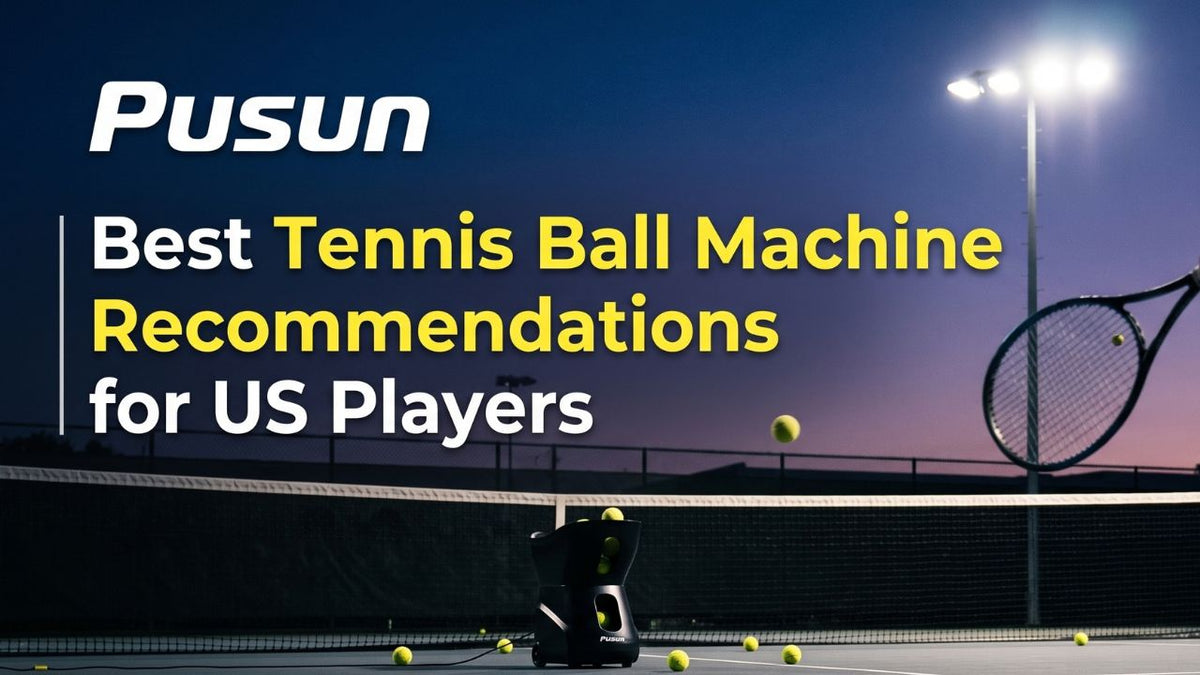

Finding the Best Tennis Ball Machine for Solo Practice in the USA
Finding the best tennis ball machine for solo practice in the USA requires cutting through marketing noise to solve real-world on-court challenges. Across popular player forums and US coaching communities, tennis enthusiasts frequently debate a recurring frustration: heavy launchers that end up gathering dust in the garage because moving them feels like a workout. When balancing busy schedules, erratic hitting partner availability, and public court transport, choosing the right automated launcher is essential for turning unstructured court time into high-repetition muscle memory training. Why Solo Tennis Players Invest in Smart Ball Launchers A reliable tennis ball machine offers unwavering shot consistency, allowing players to groove groundstrokes and iron out mechanical flaws without relying on human scheduling. Solo training sessions often break down when players rely on static wall-hitting or manual ball buckets that disrupt rhythm. Modern smart launchers solve this bottleneck by providing adjustable ball velocity, customizable spin levels, and programmable multi-point landing zones. For instance, players targeting a high-percentage crosscourt forehand can execute hundreds of structured feeds with identical height and depth, establishing automatic stroke mechanics under physical fatigue. Unmatched Consistency: Removes human feeding variation so every ball mirrors precise tactical depth and height. Cardio and Footwork: Forces rapid recovery splits and lateral movement to build functional endurance. Targeted Weakness Isolation: Allows players to drill specific problem areas, such as low backhands or high defensive slices, until execution becomes second nature. Evaluating US Market Options: Portability versus Performance When choosing a tennis launcher in the United States, players must carefully evaluate the trade-offs between physical weight, battery endurance, and advanced programming features. A frequent complaint among recreational players is that heavy traditional club tier machines weighing over 60 pounds are too exhausting to load into a car trunk. To counter this, modern engineering has prioritized compact footprints, built-in wheels, and external lithium ion power systems. For casual backyard practice or driveway sessions, lightweight entry points like the PT-Mini Pro weigh just 8 kg and pair with a dedicated return net to eliminate ball collection chores. For full-court versatility, units like the PT-Smart deliver 75 MPH speeds and a 100-ball capacity within a 15 kg frame that fits easily into a mid-size SUV trunk. Machine Model Top Speed Ball Capacity Oscillation Type Best Suited For PT-Mini Pro 37 MPH (60 km/h) 60 Balls 5-Point Horizontal Random Beginners and Home Practice PT-Smart 75 MPH (120 km/h) 100 Balls External Oscillation Intermediate Club Players PT-Smart Pro 75 MPH 100 Balls Internal Oscillation Advanced Solo Training PT-MAX C 87 MPH (140 km/h) 120 Balls Internal Oscillation High-Intensity and Coaches PT-9001 87 MPH (140 km/h) 120 Balls Internal Oscillation (35 PTS) Elite Academies and Pros Addressing Community Pain Points: Internal Oscillation versus Telegraphing Shots A common critique on tennis forums involves older mechanical sweepers that visibly pivot back and forth, telegraphing the next shot location and allowing players to cheat their footwork. To create realistic match-play conditions, modern high-end equipment utilizes internal oscillation. In this setup, the external machine body remains completely stationary while the internal throwing mechanism shifts angles. This hides the launch trajectory, forcing players to read the ball dynamically. Furthermore, advanced units like the PT-Smart Pro offer 28 custom landing points, while the elite PT-9001 expands this to 35 points. This flexibility prevents practice sessions from becoming predictable and boring. Concealed Movement: Internal oscillation removes visual cues, ensuring players react to the ball rather than the physical motion of the machine. App-Driven Control: iOS, Android, and Apple Watch integration lets players switch between tactical sequences without walking back to manual dials on the housing. Battery Logistics: External LiFePO4 batteries supporting 4 to 6 hours of continuous play allow users to detach and charge the power pack indoors without hauling the entire unit inside. Why Choose Pusun Tennis for Your Tennis Ball Machine When investing in an automated training partner, buyers across the United States look closely at fulfillment reliability, post-purchase protection, and local stock availability to avoid lengthy international shipping delays. Pusun Tennis streamlines the US buying experience by partnering with Amazon logistics and utilizing more than 30 nationwide warehouses. This infrastructure allows mainland US customers to receive free shipping with delivery times typically completed within 1 to 3 business days, or up to 5 days for remote locations. Furthermore, every machine is backed by a comprehensive 3-year warranty on the main unit and a 1-year warranty on the lithium battery, alongside modular designs that facilitate easy self-repairs with free spare parts shipping during the warranty window. Rapid US Delivery: Mainland orders ship free through local warehouse networks and Amazon fulfillment partners, arriving in 1 to 3 business days. Robust Warranty Coverage: Features a 3-year main unit warranty and a 1-year battery warranty, supported by free replacement parts delivery for manufacturing defects. Global and Local Support: Dedicated service infrastructure minimizes downtime and ensures players can maintain their training schedules with confidence. Tennis players looking for broader industry gear insights can consult equipment roundups on Tennis Industry Magazine, while facility managers can reference USTA Facility Guidance for court setup standards. Maximizing Solo Court Efficiency with Structured Drills Transitioning from casual hitting to structured and goal-oriented practice ensures that a tennis ball machine acts as a genuine performance multiplier rather than an expensive garage ornament. When using app-controlled launchers such as the PT-MAX C, which reaches speeds up to 87 MPH across 120 balls, sessions should be broken down into distinct physical phases. This structure prevents repetitive strain and builds game-ready footwork habits. Step 1 Dynamic Warm-Up: Set a moderate feed rate of 3 to 4 seconds to establish baseline depth, focusing on split-steps and clean contact points. Step 2 Multi-Point Sequencing: Program 3-ball combination drills, such as a deep crosscourt slice followed by an aggressive short-angle put-away, to simulate actual point construction. Step 3 Equipment Care: To maximize battery lifespan, ensure external LiFePO4 packs are recharged every 14 to 21 days during extended periods of off-season storage. What specific shot pattern or tactical drill area, such as defensive recovery running, approach shot depth, or baseline forehand consistency, are you hoping to refine most during your upcoming solo practice sessions?
Learn more