

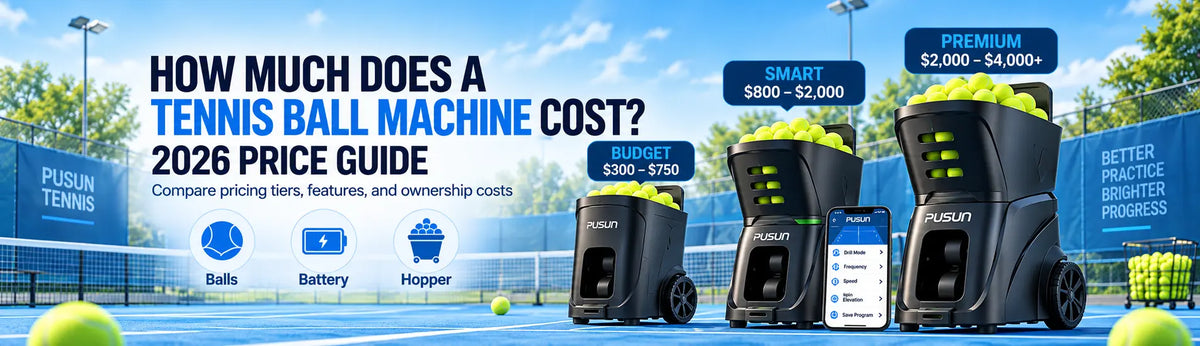
Wondering how much does a tennis ball machine cost? With global tennis participation expanding across major athletic markets, finding the right training equipment transforms solo practice sessions. Whether you are a weekend warrior or a professional coach, this comprehensive tennis ball machine buyer's guide breaks down actual market pricing tiers, hardware features, and ownership expenses.
When evaluating your options across the industry, understanding the market landscape is essential for making a smart purchase. Reviewing current marketplace offerings and comparing how much does a tennis ball machine cost gives buyers a clear benchmark before committing funds.
Tennis Ball Machine Pricing Tiers Explained
When mapping out your investment, automated training systems generally fall into three distinct categories based on their build quality, portability, and onboard programming capabilities. Understanding these tiers ensures you do not overpay for advanced features you will rarely use or underbuy for your competitive skill level.
|
Pricing Tier |
Price Range |
Target Audience |
Key Features & Examples |
|
Budget / Entry-Level |
$300 – $750 |
Beginners & Casual Players |
Light, compact chassis; lower top speeds under 45 mph; basic oscillation. Examples: Spinshot Home ($299), Slinger Bag. |
|
Mid-Range / Smart AI |
$800 – $2,000 |
Intermediate to Advanced Players |
Advanced spin control, app integration; speeds up to 75+ mph; 4+ hour battery life. Example: PUSUN PT-Smart Pro. |
|
Premium / Club-Level |
$2,000 – $4,000+ |
Coaches, Clubs, & Serious Competitors |
Massive capacities (120–250+ balls); heavy-duty builds; multi-point programmable shot sequences. Example: PUSUN PT-9001. |
Entry-Level and Budget Equipment Analysis
What to Expect from Budget Models
Budget-friendly options generally retail between $300 and $750. These machines are specifically designed for recreational players and casual weekend participants who want simple, repetitive feeding without complex technical programming. They emphasize lightweight construction and portability over heavy-duty motor performance.
Limitations of Lower-Priced Systems
While budget units reduce initial friction for buyers, they often lack sophisticated smartphone connectivity, multi-point programming, and high-velocity output. Speeds usually remain under 45 mph, and battery longevity can be restrictive during longer weekend training sessions.
Mid-Range Smart and Portable Units
The Sweet Spot for Intermediate Players
Retailing from $800 to $2,000, mid-range systems offer the best balance of advanced functionality and value. These models integrate seamless smartphone application control, customizable feed intervals, and variable spin mechanics to simulate authentic match play.
Advanced Features in Mid-Range Builds
Mid-range options frequently incorporate robust external or internal lithium battery systems that power 4 to 8 hours of continuous play. Units like the PUSUN PT-Smart Pro showcase how modern engineering brings professional-grade drills directly to home courts.
Premium Club-Level and Professional Systems
Heavy-Duty Engineering for Academies
Commercial-grade and club-level units command prices between $2,000 and $4,000+. Built for intense daily operations, these machines feature rugged chassis designs and massive ball capacities exceeding 120 to 250+ balls.
Multi-Point Custom Programming
Elite machines such as the flagship PUSUN PT-9001 deliver complex multi-point landing sequences, high-velocity output up to 87 mph, and dual-sport compatibility for both tennis and padel training environments.
The Hidden Costs of Owning a Tennis Ball Machine
The upfront price tag of a machine is only part of the equation. Factoring in recurring maintenance and accessory costs will prevent unexpected surprises down the road.
Pressureless Balls vs. Pressurized Tennis Balls
Standard pressurized tennis balls lose their bounce rapidly when continuously cycled through high-speed mechanical delivery wheels.
- Players must invest in bulk cases of pressureless tennis balls or durable training options.
- High-end transition choices like specialized pressureless training packs ensure consistent bounce and extend batch lifespans.
Court Accessories and Hoppers
- Gathering 150 scattered balls across a court by hand is an exhausting workout on its own.
- Investing in a reliable ball tube or basket hopper ($30 to $150) streamlines cleanup and maximizes active practice time.
Battery Replacements and Maintenance
- Standard internal batteries naturally degrade over 2 to 4 years of heavy charging cycles.
- Opting for modern lithium-ion or external LiFePO4 battery systems—such as those utilized in premium PUSUN builds significantly extends battery longevity and minimizes replacement frequency.
Why Choose PUSUN TENNIS for Your Training Gear
Choosing the right manufacturer is just as important as setting a budget. Pusun Tennis stands out as an industry leader by engineering smart, durable, and highly accessible training equipment directly for players, coaches, and home-court owners worldwide.
- Advanced App Integration: Manage custom drills effortlessly using iOS, Android, Apple Watch apps, or dedicated smart remotes.
- Exceptional Value & Dual-Sport Flexibility: Models like the flagship PUSUN PT-9001 offer multi-point custom programming and dual tennis/padel compatibility without the inflated markup of legacy brands.
- Global Logistics & Warranty Protection: Enjoy reliable shipping infrastructure across North America, Europe, the UK, and Asia, backed by a robust 3-year limited warranty on main units and 1-year battery coverage.
Ready to transform your solo practice sessions and accelerate your progress on the court? Explore Pusun Tennis Machines Now to find a high-performance system customized for your training requirements.
Frequently Asked Questions
How much should I expect to spend on a good tennis ball machine?
A quality mid-range machine equipped with smart app integration, variable spin, and reliable battery life generally costs between $800 and $2,000. This tier satisfies the demands of both recreational weekend warriors and developing junior competitors.
Can I use regular tennis balls in a ball machine?
Yes, but standard pressurized balls lose their bounce quickly under heavy mechanical stress. It is recommended to use specialized pressureless tennis balls or durable training balls to maintain consistent performance and save money on frequent replacements.
How long do tennis ball machine batteries last?
Most standard internal batteries last between 2 to 4 years before requiring a replacement. Modern systems utilizing advanced lithium-ion or external LiFePO4 batteries offer longer operational runtimes and extended overall component lifespans.
Are app-controlled tennis ball machines worth the extra cost?
Absolutely. App-controlled machines allow you to design custom drill sequences, modify ball speeds, adjust spin rates, and control oscillation directly from your smartphone or smartwatch, providing a far more dynamic practice session than basic manual dials.
Does Pusun Tennis offer international shipping and warranties?
Yes. Pusun operates globally with localized regional fulfillment hubs across North America, Europe, the UK, and Asia. Furthermore, their main machines are backed by a competitive 3-year limited warranty for peace of mind.


